Disponível (Confirmar stock com a nossa loja - Confirmar: | )
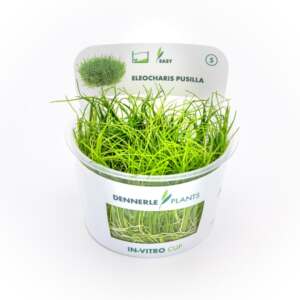
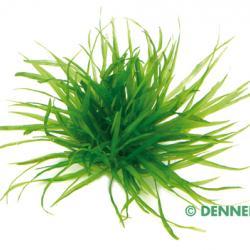
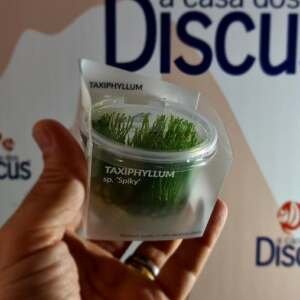
The dwarf spike rush, Eleocharis pusilla, is native to Australia and New Zealand and inhabits wetlands with different water levels. In contrast to Eleocharis acicularis, the growth height is significantly shorter, usually only a few centimetres high. Another distinguishing feature are the light green, slightly curved stems of the dwarf spikerush. This grass grows best in cooler water, it cannot tolerate permanently high temperatures over 25° C. This delicate beauty is extremely well suited to stone layouts in the Iwagumi style, for the creation of a fresh "summer meadow". Like Echidonorus acicularis, the dwarf spikerush can also be cut well back, which makes the plant even denser and more compact
Disponível (Confirmar stock com a nossa loja - Confirmar: | )
This unusual and attractive cultivar is called 'Flamingo'. Its most eye-catching feature is the light to dark pink colouration of the leaves. This variety came about by quirk of nature in one of our greenhouses. 'Flamingo' is only cultivated through meristem propagation in the lab, and is sold in a plastic culture dish. It grows very slowly in aquaria and must have good lighting to ensure successful cultivation. A wonderfully decorative addition combined with mosses or Hemianthus in small aquaria or Nano Cubes.
Disponível (Confirmar stock com a nossa loja - Confirmar: | )
STAUROGYNE SPEC.Essa nova variedade atraente do Brasil é chamada Staurogyne repens, um membro da família acanto. Parece um Hygrophila em miniatura, mas é uma planta excelente para o primeiro plano. Cresce muito lentamente e em boas condições se arrasta pelo substrato. Staurogyne requer luz forte e um bom suprimento de nutrientes através do substrato. Aparar regularmente as dicas de brotações incentivará a planta a cultivar muitas brotações horizontais novas e, eventualmente, fornecerá um conjunto de plantas muito agradável e espesso. Para fins de paisagismo, essas belezas se misturam bem com Hemianthus callitrichoides.
Disponível (Confirmar stock com a nossa loja - Confirmar: | )
GRASSY BLADDERWORTUtricularia graminifolia é uma planta verde clara elegante e em primeiro plano. Encontramos essa variedade a uma altitude de 2.000 m em água que flui rapidamente e emergimos na zona de espirro de pequenos riachos no Sri Lanka. Nos aquários, esta planta precisa de luz média para produzir gradualmente um tapete grosso, mas muito curto. Utricularia tem algumas características únicas: é uma planta carnívora e produz armadilhas vesicais especiais para capturar microorganismos que passam. Peixes e camarões são perfeitamente seguros,
Floating liverwort is well-documented around the world, and floats on the surface or inhabits moist substrate. Takashi Amano was the first to popularise this floating moss as an aquarium plant. He adds Riccia as a foreground plant to many of his designs. It is very easy to cultivate and care for: attach the cushions to rocks or logs to provide a solid base on which to grow. Maintain compact growth by trimming the light green branches with scissors every so often. CO2 supplementation significantly increases growth.
Disponível (Confirmar stock com a nossa loja - Confirmar: | )
Este belo musgo vem das Ilhas Sunda da Indonésia. Comercialmente, é também conhecido como "musgo de Natal". Leva o nome dos galhos pendentes que se parecem com os de uma árvore de Natal. Exigente e muito fácil de cultivar, e pode ser modelado através de poda regular. Como todos os musgos, V. montagnei cresce bem quando ligada a madeira e pedras. Isso também facilita muito a reorganização do hardscape a qualquer momento.
Disponível (Confirmar stock com a nossa loja - Confirmar: | )
Juncus repens is a grass-like marsh plant which also grows strongly under water. This small species of rush is native to southern and eastern USA and inhabits marshy shallow water. In the aquarium, Juncus repens is easy to care for and resilient. Soft water with a good CO2 supply promotes optimum growth. In combination with other grass-like plants, you can design decorative meadow landscapes. However, this creeping rush also makes an attractive feature as a "filler plant" between stones. With strong lighting and a good supply of micro-nutrients, the shoots can also become slightly reddish in colour.
Disponível (Confirmar stock com a nossa loja - Confirmar: | )
BLYXA JAPONICAGrowth height- 15 cmOrigin countryOstasienUsageGesellschaftsaquarium, NanoCubeTypeStängelpflanzeFamilyHydrocharitaceaeSpeciesBlyxaBreedingSeitentriebeGrowth speedmittelpH5 - 7Water hardness10 - 25 °dhHintsDWARF SOFT RUSHStunning, grass-like foreground plant. Takashi Amano’s fantastic underwater landscapes have really pushed this plant into the limelight. In the wild it only grows submerged in slow-moving, shaded water. This plant is known for being very demanding. And yet it is possible to cultivate when you take care of the important factors such as adequate light, CO2 supplementation, and nutrient-rich substrate. A large group turns any aquarium into a fascinating spectacle. With very strong lighting these plants display intense, red colouring.
Disponível (Confirmar stock com a nossa loja - Confirmar: | )
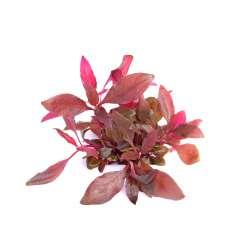
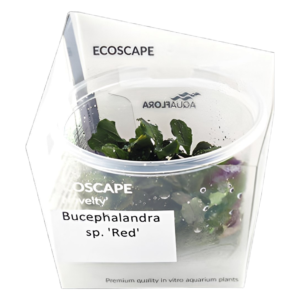
A vibrante parte inferior das folhas de cor púrpura deu esse nome a essa variedade. A superfície das folhas é de cor vinho tinto a vermelho escuro. Com boa iluminação, os brotos são muito compactos e as folhas estão próximas. Como resultado de seu crescimento muito lento, esta planta-tronco colorida também é adequada para o meio do caminho. No entanto, deve ser aparado continuamente para que as plantas de fundo não fiquem obscurecidas. Um substrato rico em nutrientes e um bom suprimento de CO2 garantem o cultivo bem-sucedido no aquário.
Disponível (Confirmar stock com a nossa loja - Confirmar: | )
FOLHA DE LÍNGUA AUSTRALIANA
Uma planta de pântano sutil e rasteira, nativa da Austrália, popularizada na década de 1980 por Takashi Amono. Agora mundialmente famoso, é frequentemente usado em aquários no estilo de paisagismo. O cultivo bem-sucedido requer uma iluminação muito boa e um bom suprimento de CO2. A maneira mais fácil de dormir nos brotos delicados é usar uma pinça de planta. Primeiro divida a planta em vasos, em seguida, plante cada uma delas com alguns centímetros de distância.
Disponível (Confirmar stock com a nossa loja - Confirmar: | )
Esta nova chegada era conhecida como especificação de Ammania. Bonsai, mas na verdade é o Rotala indica "real". Esse nome foi usado erroneamente como sinônimo de Rotala rotundifolia por décadas. Ao contrário de Rotala rotundifolia, as diferenças entre as folhas emersas e submersas desta planta são difíceis de ver. Os folhetos ovais a circulares são densamente compactados no caule e dão uma aparência muito ornamental. O crescimento é sempre vertical, o que oferece possibilidades interessantes de design. O crescimento lento também favorece colocá-lo em primeiro plano ou na zona intermediária de uma paisagem subaquática. Um grupo independente em um tapete Hemianthus parece particularmente impressionante.
Disponível (Confirmar stock com a nossa loja - Confirmar: | )
NYMPHOIDES SPEC. ´TAIWAN´ IN-VITRO
Growth height- 40 cmOrigin countrySüdostasien
UsageDiskusaquariumTypeAusläufer
FamilyMenyanthaceaeSpeciesNymphoides
BreedingAdventivpflanzen an den BlätternGrowth speedmittel
pH6 - 8Water hardness4 - 18 °dh
Hints
In contrast to many other Nymphoides species with floating leaves, this species only forms underwater leaves. The decorative, vibrant, light green leaves create excellent contrast with other green or coloured aquarium plants. The origin of this species is still uncertain – the first examples were imported from Taiwan. Hence the variety name of this low-maintenance Nymphoides species, 'Taiwan'. This plant is also especially well-suited to Discus aquaria. The fish like to hang around under the leaf canopy
Disponível (Confirmar stock com a nossa loja - Confirmar: | )
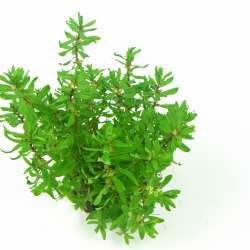
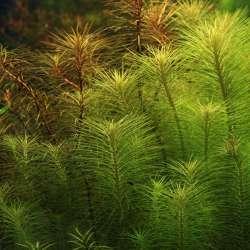
Pogostemon deccanensis é outro recém-chegado da Índia. Esta planta-tronco forma folhas finas em forma de agulha em uma maravilhosa cor verde brilhante. Não é muito difícil cultivar se houver luz e CO2 suficientes. Para fins de paisagismo, essa beleza indiana se mistura muito bem com plantas de tom vermelho ou marrom. Sua taxa de crescimento está na faixa intermediária. Um grupo de plantas pode ser podado radicalmente - as hastes produzirão rapidamente novos rebentos laterais e as plantas serão mais grossas e compactas.
Disponível (Confirmar stock com a nossa loja - Confirmar: | )
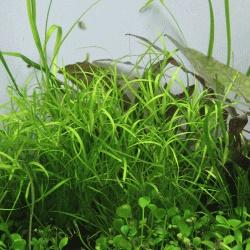
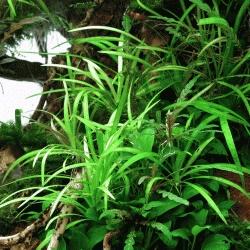
We discovered this grass-like beauty on our Florida Plantahunter Tour in winter 2012. At first glance it looks very similar to Helanthium tenellum (former name: Echinodorus tenellus) and is easily confused. The difference lies in the colour and width of the leaves and the growth height appears to be somewhat smaller. We named this plant 'Broad Leaf' due to the width of the leaf blades being up to 2.5 mm. The colour of the leaves stays bright mid-green, so it combines well with colourful plants such as Hygrophila pinnatifida, for example. Care needs are similar to the standard Helanthium tenellum. Lawn formation is encouraged by vigorous pruning.
Disponível (Confirmar stock com a nossa loja - Confirmar: | )
INFO
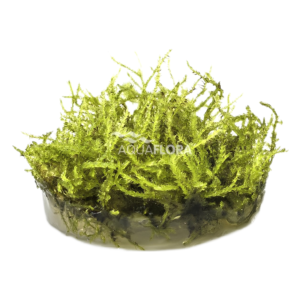
Like Taxiphyllum alternans 'Taiwan', the 'Giant' moss is a very attractive moss for greening stones and roots. As the name suggests, the leaflets and growth of the moss fronds are somewhat larger. The appearance of this pretty moss is nevertheless very attractive and an enrichment for any underwater landscape. Like all mosses, the 'Giant' moss loves fresh and clear water. Regular pruning promotes healthy and compact growth.
Disponível (Confirmar stock com a nossa loja - Confirmar: | )
No passado, essa planta semelhante a grama era mais conhecida como "Echinodorus tenellus". É uma das plantas em primeiro plano mais populares há muitas décadas e pode ser descrita como um "clássico". Em contraste com a forma de crescimento puramente verde, parvulum, a forma de crescimento de folhas estreitas torna-se avermelhada violeta com boa iluminação - um bom contraste com plantas que formam almofadas verdes brilhantes, como Micranthemum tweediei. Fortemente cortado, Helanthium tenellum 'Red' forma um denso 'tapete de grama'. No paisagismo, os tiros individuais dão sotaques finos em uma paisagem.