Disponível (Confirmar stock com a nossa loja - Confirmar: | )
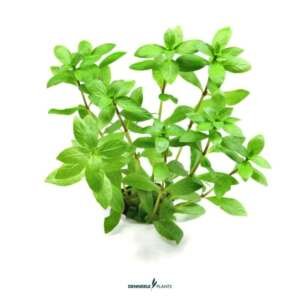
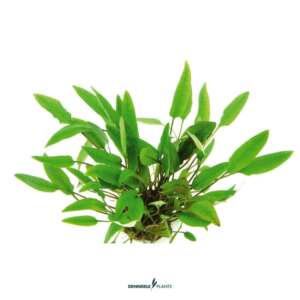
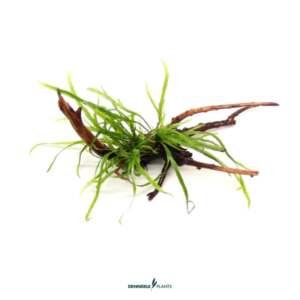
ÁGUA INDIANAHygrophila polysperma é uma das plantas aquáticas "mais fáceis". Mesmo nas piores condições possíveis, ele continuará a crescer. Melhorar as condições é, obviamente, benéfico para a planta e seu crescimento. Sob boa iluminação, as mudas ficam com uma cor marrom avermelhada. Esta planta cresce muito rapidamente e precisa ser cortada com mais frequência do que outras plantas-tronco. Altamente recomendado para novas configurações e como medida preventiva contra algas.
Disponível (Confirmar stock com a nossa loja - Confirmar: | )
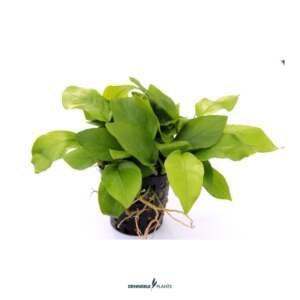
Anubias nana Gold
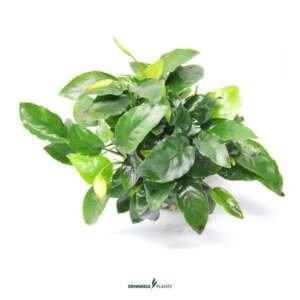
This is another new variety of dwarf Anubias called 'Gold'. It was discovered during regular cultivation at a nursery in Taiwan. After the isolation period it took several years to establish a stable stock. With leaves ranging in colour from light green to yellow-gold it is significantly different from the other, darker green types of Anubias. Again, it does not do well in very low lighting as this makes the leaves turn a darker colour.
Disponível (Confirmar stock com a nossa loja - Confirmar: | )
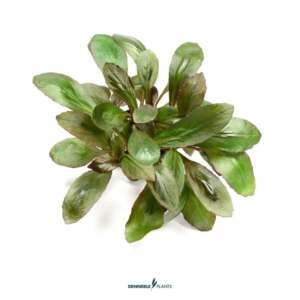
CRYPTOCORYNE BECKETTII
Altura de crescimento10 a 20 cmPaís de origemSri Lanka
UsoNanoCubeTipoRosettenpflanze
FamíliaAraceaeEspéciesCryptocoryne
Criação de animaisAusläuferVelocidade de crescimentoMittel
pH6 a 8Dureza da água10 a 20 ° dh
Dicas
CRIPTOCORIA DE BECKETT
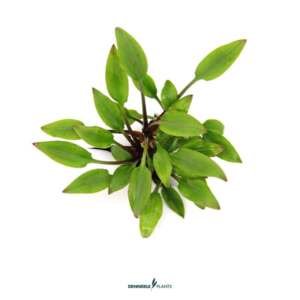
O Sri Lanka é o lar de muitas espécies de criptocoria, incluindo o Cryptocoryne beckettii. Estas plantas também foram cultivadas com sucesso em aquários durante décadas. Na natureza, eles são encontrados em áreas sombreadas perto das margens de córregos e rios, onde crescem anfíbiamente acima e abaixo da linha d'água. A cor de qualquer folha submersa varia em tons de verde e marrom. Coloração de folhas diferente dentro da mesma espécie é típica do gênero Cryptocoryne.
Disponível (Confirmar stock com a nossa loja - Confirmar: | )
Anubias nana Gold
This is another new variety of dwarf Anubias called 'Gold'. It was discovered during regular cultivation at a nursery in Taiwan. After the isolation period it took several years to establish a stable stock. With leaves ranging in colour from light green to yellow-gold it is significantly different from the other, darker green types of Anubias. Again, it does not do well in very low lighting as this makes the leaves turn a darker colour.
Disponível (Confirmar stock com a nossa loja - Confirmar: | )
A new genus takes aquatics by storm! The endemic genus Bucephalandra is only found in Borneo and like the Cryptocorynes and Anubias it belongs to the arum family. The exact scientific definition is currently very uncertain, so we get the name of this variety from the habit of the plant. Bucephalandra species are epiphytes and should therefore be attached to stones and roots. The 'Wavy Leaf' variety grows especially vigorously and is a decorative beauty. An ideal plant for Nano Cubes!
Disponível (Confirmar stock com a nossa loja - Confirmar: | )
A new genus takes aquatics by storm! The endemic genus Bucephalandra is only found in Borneo and like the Cryptocorynes and Anubias it belongs to the arum family. The exact scientific definition is currently very uncertain, so we get the name of this variety from the habit of the plant. Bucephalandra species are epiphytes and should therefore be attached to stones and roots. The 'Wavy Leaf' variety grows especially vigorously and is a decorative beauty. An ideal plant for Nano Cubes!