Disponível (Confirmar stock com a nossa loja - Confirmar: | )
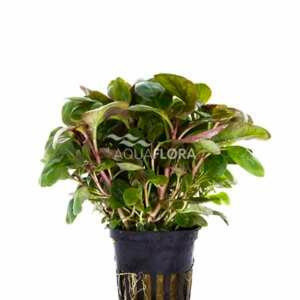
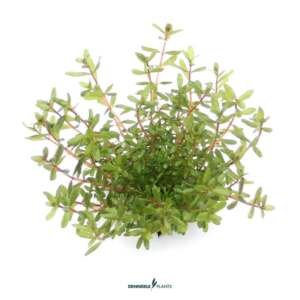
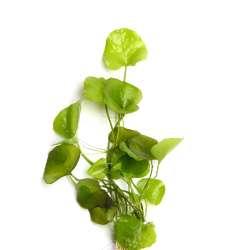
Esta nova chegada era conhecida como especificação de Ammania. Bonsai, mas na verdade é o Rotala indica "real". Esse nome foi usado erroneamente como sinônimo de Rotala rotundifolia por décadas. Ao contrário de Rotala rotundifolia, as diferenças entre as folhas emersas e submersas desta planta são difíceis de ver. Os folhetos ovais a circulares são densamente compactados no caule e dão uma aparência muito ornamental. O crescimento é sempre vertical, o que oferece possibilidades interessantes de design. O crescimento lento também favorece colocá-lo em primeiro plano ou na zona intermediária de uma paisagem subaquática. Um grupo independente em um tapete Hemianthus parece particularmente impressionante.
Disponível (Confirmar stock com a nossa loja - Confirmar: | )
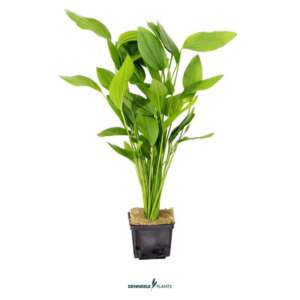
Sword plants are now distributed throughout the US and Argentina. E. argentinensis is one of the larger varieties and requires sufficient space in an underwater landscape. It is well-suited to open aquaria as its sturdy emersed leaves are highly ornamental. With a little bit of patience there may even be flower shoots bearing white blossoms. Requires nutrient-rich substrate and medium to strong lighting.
Disponível (Confirmar stock com a nossa loja - Confirmar: | )
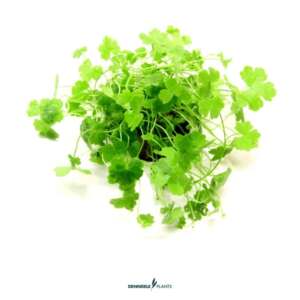
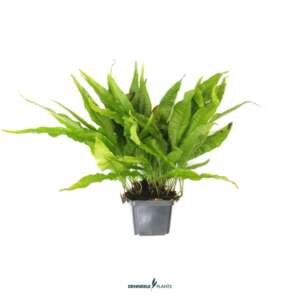
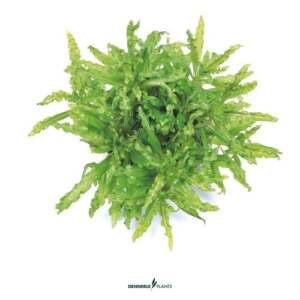
Like the Asplenium fern, the classification for this variety is not yet definitive, hence the “cf.” in its name. This new plant does have some very interesting growth habits: under strong light it usually creeps across the substrate and even across other plants. The tiny, clover-shaped leaves are certainly distinctive. It is not demanding in terms of water conditions, but strong light encourages this carpet-like growth. We advise occasionally removing any overgrowth with scissors or a knife.
Disponível (Confirmar stock com a nossa loja - Confirmar: | )
Informações
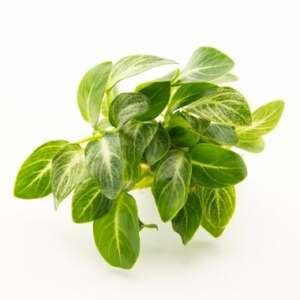
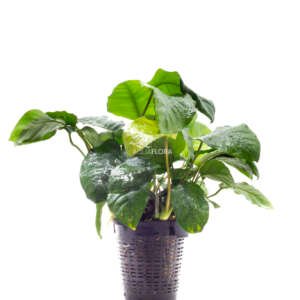
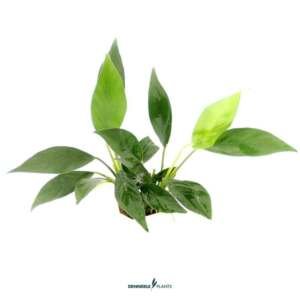
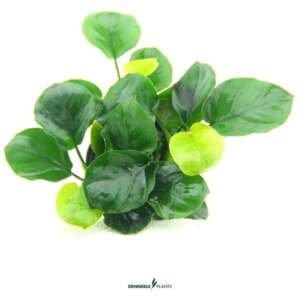
Anubias barteri var. nana 'Stardust' é uma variedade extraordinária de folha anã de lança que imediatamente chama a atenção por seu padrão único de folha. O nome "Stardust" refere-se ao padrão característico das folhas: pontos finos e claros sobre um fundo verde escuro lembram um céu noturno estrelado. Cada planta apresenta uma distribuição individual desse fascinante padrão.
Disponível (Confirmar stock com a nossa loja - Confirmar: | )
Bacopa carolineana, emersedA stem plant that is one of the classic aquarium plants. It grows much more slowly than other stem plants, and needs a well-lit location to help it produce the pretty brown-coloured leaves. Emersed plants are pure green and display obvious hairs on the stems. Place in a large group to achieve the most appealing effect, ideally with the stems arranged in ascending height order toward the back of the tank. This results in a harmonious sight for the observer.
Disponível (Confirmar stock com a nossa loja - Confirmar: | )
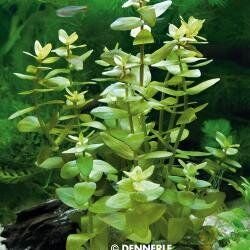
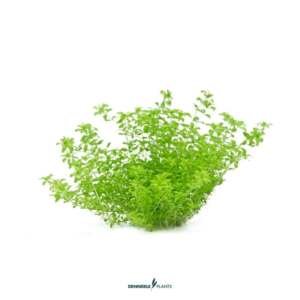
Baby tearsformerly Micranthemum glomeratusHome for this delicate aquarium plant is the east coast of North America. This variety of Hemianthus grows on rocky or muddy substrate at the mouths of rivers. Its loose, upright growth and brilliant, light green colour are fresh and spring-like. A pair of sharp scissors is all you need for pruning purposes. After pruning, the plants produce a number of new side shoots and the entire cluster will appear denser and more compact. Create rich contrasts by combining light green Hemianthus with red-leaved varieties, such as Alternanthera.
Disponível (Confirmar stock com a nossa loja - Confirmar: | )
Large Amazon sword
This large Amazon sword plant is possibly the most popular aquatic plant. Its leaves are 3-6 cm wide, making them broader than the 'amazonicus', and with growth up to 60 cm it is certainly the more dominant in appearance. Older bushes, sometimes with more than 50 leaves, are an impressive sight. The substrate must be at least 10 cm deep so that the root system can spread properly. Combine with various Helanthium species (dwarf Echinodorus) to create outstanding South American underwater landscapes.
Disponível (Confirmar stock com a nossa loja - Confirmar: | )
Schismatoglottis prietoi é uma verdadeira novidade e um enriquecimento para aquários. A planta lembra um pouco as Anubias de crescimento pequeno, mas tem folhas muito mais macias. Pode ser plantado diretamente no solo, com uma taxa de propagação muito boa. De acordo com experiências iniciais, essa nova beleza das Filipinas também cresce em raízes ou pedras. É altamente recomendado para aquários menores, como os nano cubos. Devido ao seu crescimento compacto e tamanho pequeno, em um futuro próximo também será usado com freqüência em paisagens aquáticas.
Disponível (Confirmar stock com a nossa loja - Confirmar: | )
NYMPHOIDES SPEC. ´TAIWAN´ IN-VITRO
Growth height- 40 cmOrigin countrySüdostasien
UsageDiskusaquariumTypeAusläufer
FamilyMenyanthaceaeSpeciesNymphoides
BreedingAdventivpflanzen an den BlätternGrowth speedmittel
pH6 - 8Water hardness4 - 18 °dh
Hints
In contrast to many other Nymphoides species with floating leaves, this species only forms underwater leaves. The decorative, vibrant, light green leaves create excellent contrast with other green or coloured aquarium plants. The origin of this species is still uncertain – the first examples were imported from Taiwan. Hence the variety name of this low-maintenance Nymphoides species, 'Taiwan'. This plant is also especially well-suited to Discus aquaria. The fish like to hang around under the leaf canopy
Disponível (Confirmar stock com a nossa loja - Confirmar: | )
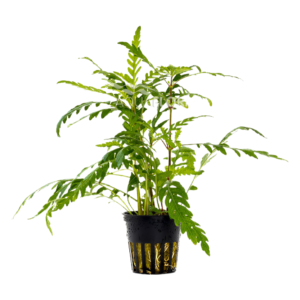
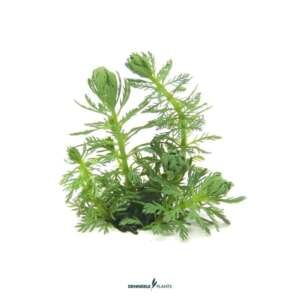
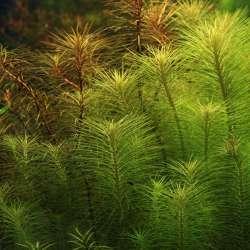
Pogostemon deccanensis é outro recém-chegado da Índia. Esta planta-tronco forma folhas finas em forma de agulha em uma maravilhosa cor verde brilhante. Não é muito difícil cultivar se houver luz e CO2 suficientes. Para fins de paisagismo, essa beleza indiana se mistura muito bem com plantas de tom vermelho ou marrom. Sua taxa de crescimento está na faixa intermediária. Um grupo de plantas pode ser podado radicalmente - as hastes produzirão rapidamente novos rebentos laterais e as plantas serão mais grossas e compactas.
Disponível (Confirmar stock com a nossa loja - Confirmar: | )
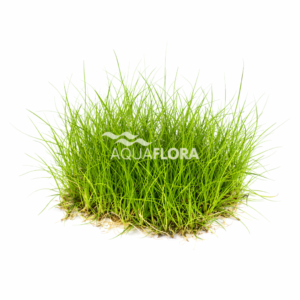
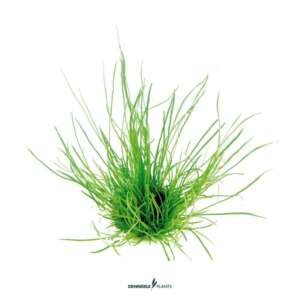
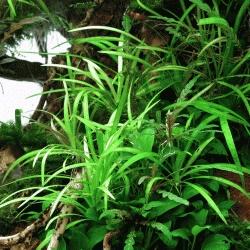
We discovered this grass-like beauty on our Florida Plantahunter Tour in winter 2012. At first glance it looks very similar to Helanthium tenellum (former name: Echinodorus tenellus) and is easily confused. The difference lies in the colour and width of the leaves and the growth height appears to be somewhat smaller. We named this plant 'Broad Leaf' due to the width of the leaf blades being up to 2.5 mm. The colour of the leaves stays bright mid-green, so it combines well with colourful plants such as Hygrophila pinnatifida, for example. Care needs are similar to the standard Helanthium tenellum. Lawn formation is encouraged by vigorous pruning.