Disponível (Confirmar stock com a nossa loja - Confirmar: | )
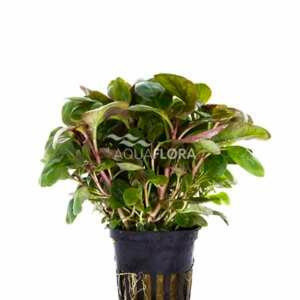
Red tiger lotus as sprouted tubersRed Tiger Lotus is widespread across tropical Africa, where it inhabits various bodies of water, including temporary pools and lakes, and flowing water. It has a tuber for storing nutrients and robust floating leaves. Its most attractive feature is the submerged juvenile leaves that do not reach the water surface. Of the two colour forms, this red variant is most popular among aquarists; the green version is hard to find commercially. Tiger Lotus is generally undemanding; older, larger leaves should always be removed at the base of the tuber.
Disponível (Confirmar stock com a nossa loja - Confirmar: | )
Lágrimas de bebê anão foram descobertas há vários anos em um riacho na ilha de Cuba. Folhas com apenas alguns milímetros de largura fazem deste Hemianthus a menor planta de aquário do mundo. É uma planta altamente adaptável em termos de valores da água, mas é importante fornecer boa iluminação e um bom suprimento de CO2. As plantas que crescem acima da água podem ser divididas em pequenos pedaços e plantadas. Dentro de algumas semanas, você terá um tapete denso em primeiro plano. Os desenhos de aquários que combinam essas plantas com todos os tipos de trabalhos em pedra parecem ornamentais e naturais.
Disponível (Confirmar stock com a nossa loja - Confirmar: | )
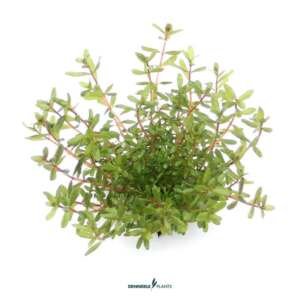
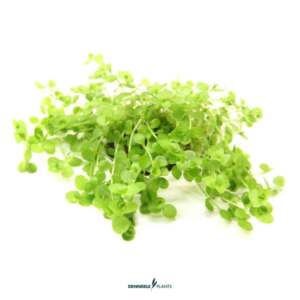
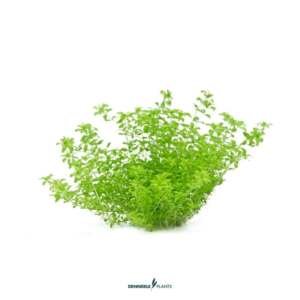
Micranthemum spec. 'Monte Carlo' is a new, promising foreground plant. The name of this variety comes from the Argentinian city of Monte Carlo in the province of Misiones. In contrast with M. umbrosum, this plant does not grow upright, but creeps along the bottom as a cushion. This makes this new variety a very good alternative to Hemianthus callitrichoides 'Cuba', with much better growth habits. This new pearl grass is ideally suited for aquascaping and perfect for Nano Cubes.
Disponível (Confirmar stock com a nossa loja - Confirmar: | )
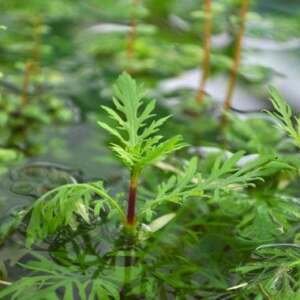
A new species from India with extraordinary character. It has only been commercially available for a few years and is being used increasingly in fascinating landscapes. Not only are the leaves a very attractive rust brown to olive green, they also have a lovely feathered shape. Combine with simple plant shapes to really highlight the ornamental leaves. These plants also have the ability to grow on rocks and roots, which is completely atypical for a stem plant.
Disponível (Confirmar stock com a nossa loja - Confirmar: | )
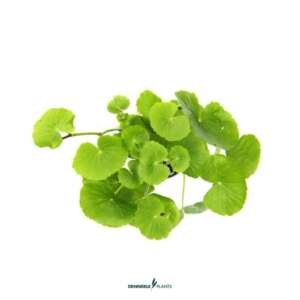
Hydrocotyle leucocephala, ou pennywort brasileiro da água, é uma planta-tronco muito pouco exigente. Encontramos essa planta nas águas rasas dos rios cristalinos e também no solo húmido da densa floresta. Nos aquários, cresce muito rapidamente e é altamente recomendado para iniciantes em aquascaping. Assim que os rebentos atingem a superfície da água, eles continuam a crescer e a se espalhar. Devido a esse rápido crescimento, as hastes precisam ser cortadas e replantadas com frequência.
Disponível (Confirmar stock com a nossa loja - Confirmar: | )
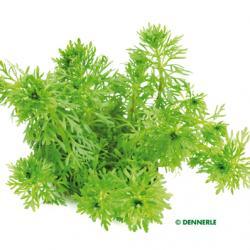
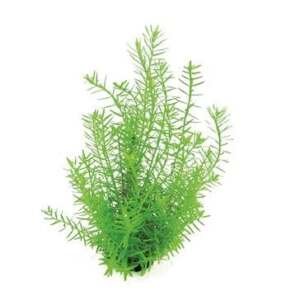
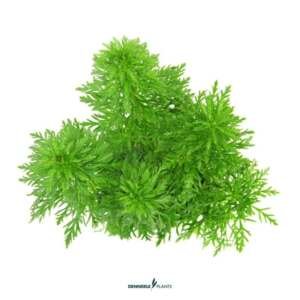
Small AmbuliaA stem plant that is widespread across Asia. In its emersed state it is a dwarf plant with shoots densely covered in leaves. In aquaria, the feathered leaf shape is much more apparent, and the colour changes to light green. Limnophila sessiliflora is a good alternative to light-hungry Cabombas. As with many of the more delicate stem plants, these stems are better planted in a large group. Under good lighting the shoots turn a rusty brown colour
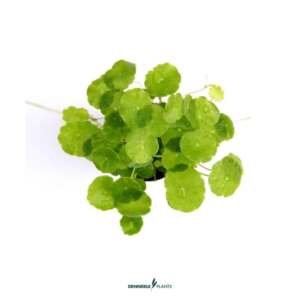
Unlike other Hydrocotyle species, this plant retains its trailing growth form. Verticillata originates from America and becomes 3-7 cm tall. Optimum growth is only achieved in strong light and soft, slightly acidic water. It does not need to be rooted, but can be used as a floating plant. Hydrocotyle verticillata is definitely a foreground plant which can also be used in garden ponds. It can also be used as an indoor plant if the soil is kept moist.
Ludwigia repens
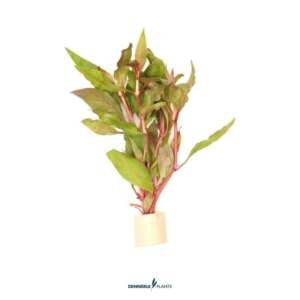
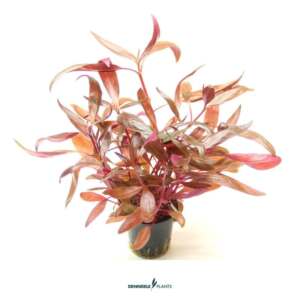
Esta variante de cor está disponível comercialmente há quase 10 anos e é uma das plantas de aquário de folhas vermelhas mais atraentes. A geração de tons ricos e vermelhos requer iluminação forte e um bom suprimento de CO2. Nessas condições, os pares de folhas estão muito bem dispostos nas hastes e as plantas parecem muito compactas. Um grupo de cerca de 10 hastes misturadas com variedades verdes claras é como assistir a uma queima de fogos debaixo d'água!
Large Amazon sword
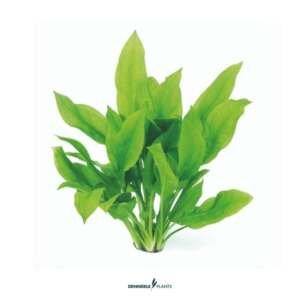
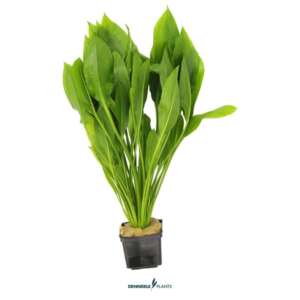
This large Amazon sword plant is possibly the most popular aquatic plant. Its leaves are 3-6 cm wide, making them broader than the 'amazonicus', and with growth up to 60 cm it is certainly the more dominant in appearance. Older bushes, sometimes with more than 50 leaves, are an impressive sight. The substrate must be at least 10 cm deep so that the root system can spread properly. Combine with various Helanthium species (dwarf Echinodorus) to create outstanding South American underwater landscapes.
Disponível (Confirmar stock com a nossa loja - Confirmar: | )
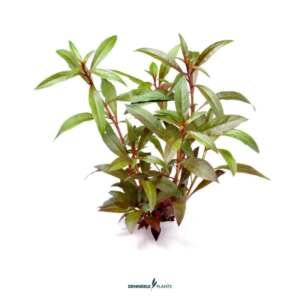
A vibrante parte inferior das folhas de cor púrpura deu esse nome a essa variedade. A superfície das folhas é de cor vinho tinto a vermelho escuro. Com boa iluminação, os brotos são muito compactos e as folhas estão próximas. Como resultado de seu crescimento muito lento, esta planta-tronco colorida também é adequada para o meio do caminho. No entanto, deve ser aparado continuamente para que as plantas de fundo não fiquem obscurecidas. Um substrato rico em nutrientes e um bom suprimento de CO2 garantem o cultivo bem-sucedido no aquário.
Disponível (Confirmar stock com a nossa loja - Confirmar: | )
The genus Lagnandra is very closely related to the Cryptocorynes and colonises similar habitats. Lagenandra meeboldii is a very varied species and the variety ‚Red‘ is a wonderfully coloured plant for the midground. Until now most species in the genus Lagenandra were unsuitable for aquariums, however this new plant from India does impressively well in an underwater landscape. Here they also form a strong rhizome like the Anubias, but they should be planted into the substrate. With its striking colour this Indian beauty makes a great feature in a plant aquarium.
Disponível (Confirmar stock com a nossa loja - Confirmar: | )
The variety 'Red Ruby' is a very pretty new cultivar which is a type of Alternanthera reineckii. The most noticeable feature is the ruby red venation on the leaves, which stands out clearly from the red background colour. The growth rate is a little slower than for A. reineckii 'Red' and 'Bronze'. This means with good lighting you can also cultivate this red beauty in a 30 l cube. In large aquaria you should plant around 15 - 20 stems to achieve an impressive group of plants, which harmonises best with "green" neighbours.
Disponível (Confirmar stock com a nossa loja - Confirmar: | )
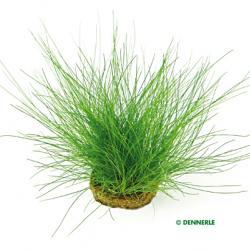
Needle rush
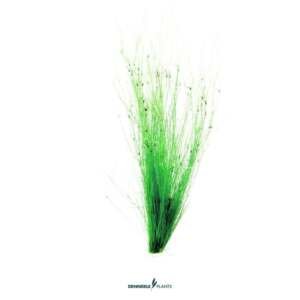
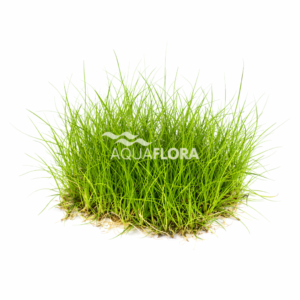
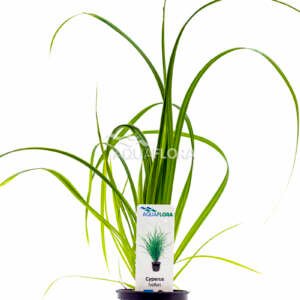
The needle rush Eleocharis acicularis is found all over the world. It is a particularly lithe, grass-like plant for the foreground. It prefers cooler water, but does grow perfectly well at higher temperatures. Side runners shoot out over time to produce a thick carpet of plants. When bedding in plants cultivated in the emersed state, we recommend pruning hard and dividing any dense plant cushions. Plant the cut rootstock at 5 cm intervals. The first submerged blades will appear after just a few days.
Disponível (Confirmar stock com a nossa loja - Confirmar: | )
Dwarf soft rush
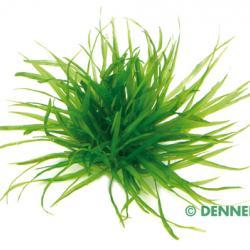
Stunning, grass-like foreground plant. Takashi Amano’s fantastic underwater landscapes have really pushed this plant into the limelight. In the wild it only grows submerged in slow-moving, shaded water. This plant is known for being very demanding. And yet it is possible to cultivate when you take care of the important factors such as adequate light, CO2 supplementation, and nutrient-rich substrate. A large group turns any aquarium into a fascinating spectacle. With very strong lighting these plants display intense, red colouring.
Disponível (Confirmar stock com a nossa loja - Confirmar: | )
Needle rush
The needle rush Eleocharis acicularis is found all over the world. It is a particularly lithe, grass-like plant for the foreground. It prefers cooler water, but does grow perfectly well at higher temperatures. Side runners shoot out over time to produce a thick carpet of plants. When bedding in plants cultivated in the emersed state, we recommend pruning hard and dividing any dense plant cushions. Plant the cut rootstock at 5 cm intervals. The first submerged blades will appear after just a few days.
Disponível (Confirmar stock com a nossa loja - Confirmar: | )
BROAD-LEAVED, RED PARROT LEAFNenhuma outra planta-tronco pode ter cores tão ricas quanto essa variedade em particular. Marrom-avermelhado através de tons de vermelho cereja flutuam sobre as hastes, superfície superior e parte inferior das folhas. Para garantir que você obtenha as cores mais intensas, esta planta precisa de boa iluminação e um suprimento adequado de CO2. A velocidade de crescimento é geralmente média, por isso é aconselhável encurtar ou podar as hastes a cada 6-8 semanas. No discus aquaria, esta planta sul-americana acrescenta um toque de cor quando combinada com plantas de espada.
Disponível (Confirmar stock com a nossa loja - Confirmar: | )
The new fern Crepidomanes cf. malabaricum is a real rarity. It belongs to the bristle fern family and is more reminiscent of a moss than a fern. In its natural habitat it grows terrestrially on large rocks and is only covered by water in the rainy season. There is only a small amount of cultivation experience, however it also grows when permanently underwater. Here its growth is classed as extremely slow. Crepidomanes is an especially good feature for delicate aquascaping layouts. The fragile rhizomes should ideally be attached to stones or roots.
Large Amazon sword
This large Amazon sword plant is possibly the most popular aquatic plant. Its leaves are 3-6 cm wide, making them broader than the 'amazonicus', and with growth up to 60 cm it is certainly the more dominant in appearance. Older bushes, sometimes with more than 50 leaves, are an impressive sight. The substrate must be at least 10 cm deep so that the root system can spread properly. Combine with various Helanthium species (dwarf Echinodorus) to create outstanding South American underwater landscapes.
Disponível (Confirmar stock com a nossa loja - Confirmar: | )
Small Ambulia
A stem plant that is widespread across Asia. In its emersed state it is a dwarf plant with shoots densely covered in leaves. In aquaria, the feathered leaf shape is much more apparent, and the colour changes to light green. Limnophila sessiliflora is a good alternative to light-hungry Cabombas. As with many of the more delicate stem plants, these stems are better planted in a large group. Under good lighting the shoots turn a rusty brown colour
Disponível (Confirmar stock com a nossa loja - Confirmar: | )
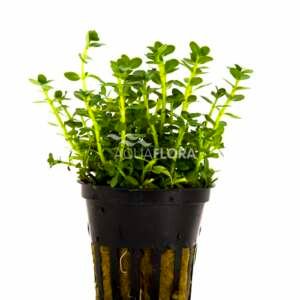
Micranthemum umbrosum is a beautiful plant from US with small round leaves. It is suitable for small or large aquariums with stems becoming 10-25 cm long and 1-2 cm wide. Relatively demanding in terms of light. CO2 addition is recommended to promote growth. Once the plant starts growing it grows fast, and the shoots have to be pinched out often (can be planted as cuttings in the bottom). Most beautiful in groups of many stems.
Disponível (Confirmar stock com a nossa loja - Confirmar: | )
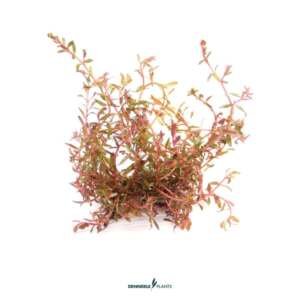
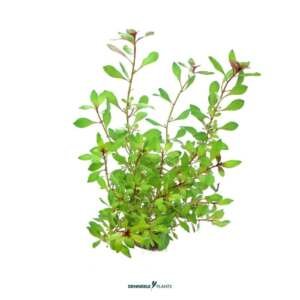
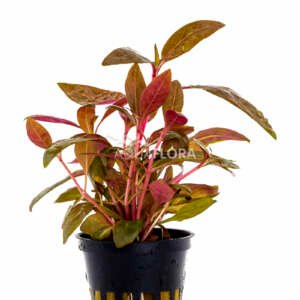
Ludwigia 'Rubin'
This colour variant has been commercially available for almost 10 years, and is one of the most attractive red-leaved aquarium plants. Generating such rich, red tones requires strong lighting and a good supply of CO2. In these conditions, the leaf pairs are very closely arranged on the stems, and the plants appear very compact. A group of around 10 stems mixed with light green varieties is like watching a fireworks display under water!
Disponível (Confirmar stock com a nossa loja - Confirmar: | )
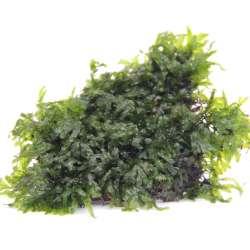
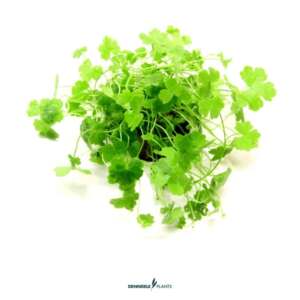
Like the Asplenium fern, the classification for this variety is not yet definitive, hence the “cf.” in its name. This new plant does have some very interesting growth habits: under strong light it usually creeps across the substrate and even across other plants. The tiny, clover-shaped leaves are certainly distinctive. It is not demanding in terms of water conditions, but strong light encourages this carpet-like growth. We advise occasionally removing any overgrowth with scissors or a knife.
Disponível (Confirmar stock com a nossa loja - Confirmar: | )
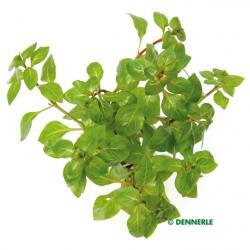
Baby tearsformerly Micranthemum glomeratusHome for this delicate aquarium plant is the east coast of North America. This variety of Hemianthus grows on rocky or muddy substrate at the mouths of rivers. Its loose, upright growth and brilliant, light green colour are fresh and spring-like. A pair of sharp scissors is all you need for pruning purposes. After pruning, the plants produce a number of new side shoots and the entire cluster will appear denser and more compact. Create rich contrasts by combining light green Hemianthus with red-leaved varieties, such as Alternanthera.
Disponível (Confirmar stock com a nossa loja - Confirmar: | )
Large Amazon sword
This large Amazon sword plant is possibly the most popular aquatic plant. Its leaves are 3-6 cm wide, making them broader than the 'amazonicus', and with growth up to 60 cm it is certainly the more dominant in appearance. Older bushes, sometimes with more than 50 leaves, are an impressive sight. The substrate must be at least 10 cm deep so that the root system can spread properly. Combine with various Helanthium species (dwarf Echinodorus) to create outstanding South American underwater landscapes.
Disponível (Confirmar stock com a nossa loja - Confirmar: | )
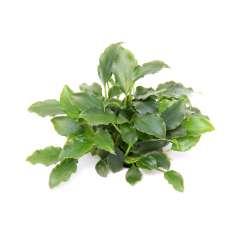
Schismatoglottis prietoi é uma verdadeira novidade e um enriquecimento para aquários. A planta lembra um pouco as Anubias de crescimento pequeno, mas tem folhas muito mais macias. Pode ser plantado diretamente no solo, com uma taxa de propagação muito boa. De acordo com experiências iniciais, essa nova beleza das Filipinas também cresce em raízes ou pedras. É altamente recomendado para aquários menores, como os nano cubos. Devido ao seu crescimento compacto e tamanho pequeno, em um futuro próximo também será usado com freqüência em paisagens aquáticas.
Disponível (Confirmar stock com a nossa loja - Confirmar: | )
Ludwigia 'Rubin'
This colour variant has been commercially available for almost 10 years, and is one of the most attractive red-leaved aquarium plants. Generating such rich, red tones requires strong lighting and a good supply of CO2. In these conditions, the leaf pairs are very closely arranged on the stems, and the plants appear very compact. A group of around 10 stems mixed with light green varieties is like watching a fireworks display under water!
Disponível (Confirmar stock com a nossa loja - Confirmar: | )
Golden-brown Ludwigia
This background Ludwigia is easy to grow and easy to care for. Normal lighting is sufficient, but more intense light will ensure you get the best possible colours. In an emersed state the plants are almost green to a light reddish-brown. They are very tolerant of different water temperatures, and you can even plant them around the edge of a pond in the summer. Propagation is via tip cuttings or side shoots. It grows relatively quickly and so requires frequent pruning.